
Do I Need a Car If I’m Staying in a Vacation Rental on Hilton Head Island?
Quick Answer: For most vacation rental guests on Hilton Head Island, yes — you need a car, or a serious commitment to using Uber and Lyft for everything. The island has excellent bike paths, but the summer heat and humidity make cycling to dinner a genuinely bad idea for most people. The one real exception worth understanding is Palmetto Dunes, which is purpose-built to keep guests comfortable and well-fed without ever needing to leave the property.
This is one of those questions we wish more guests asked before they arrived rather than after unpacking.
Hilton Head Island has an enduring reputation for its sixty-plus miles of bike paths and its relaxed, walkable resort character. That reputation is not bad, exactly.
But it describes a specific version of the island experience that requires the right property, in the right location, during the right time of year. For the majority of vacation rental guests, particularly families visiting during peak summer season, arriving without a car or a clear plan creates real friction from the very first day.
Here is the honest picture from a team that has been managing properties across this island for over fifteen years.
The Island Is Bigger Than It Looks and Hotter Than You Think
Hilton Head Island covers forty-two square miles and stretches roughly twelve miles from end to end. That sounds manageable until you are trying to get from a rental property inside Sea Pines to a restaurant on the north end of the island, or from a home in Hilton Head Plantation to the grocery store on the main corridor for something you forgot to pack.
Getting between the island’s major communities takes fifteen to twenty minutes on a calm day and considerably longer during Heritage Week, summer holiday weekends, or any Saturday in July when the bridge over the Intracoastal backs up and the whole island seems to be moving in the same direction at once.
The summer heat is the part the brochure version of Hilton Head tends to leave out. From late May through September, daytime highs average around 88 to 91 degrees Fahrenheit, with humidity levels that push the real-feel temperature significantly higher.
August is the most extreme month, with relative humidity regularly hitting 76 to 80 percent and overnight lows that rarely drop below the mid-seventies. The island is surrounded by water, which keeps ocean breezes on the beach pleasant enough, but anywhere inland the heat accumulates in a way that most visitors from cooler climates underestimate until they experience it firsthand.
The practical consequence for transportation is this: cycling on Hilton Head in July or August is a morning activity for people who get up early and are back inside before ten. It is not a reasonable way to get to a seven o’clock dinner reservation at a restaurant across the island.
Arriving at a nice restaurant after cycling for twenty minutes through humid evening air in the low nineties is not how anyone wants to start that evening. The bike paths are genuinely wonderful. They are just not a substitute for a car during the season when most families visit the island.
What the Bike Paths Are Actually Good For
The cycling infrastructure on Hilton Head is exceptional by any standard. Over sixty miles of well-maintained paved paths wind through maritime forest, along lagoon edges, and through the interior of the island’s gated communities in a way that makes a morning ride feel like genuine exploration rather than exercise for its own sake.
For guests who are up before the heat sets in, the bike paths are one of the great pleasures of staying on Hilton Head. Riding through Sea Pines Forest Preserve in the early morning, or cycling from a rental property to the beach before the sun is fully up, is the kind of experience that earns the island its reputation and keeps people coming back.
Spring and fall visitors who are on the island when temperatures are in the seventies and eighties get significantly more utility from the paths as a practical way to get around.
What cycling cannot replace is a car for anything requiring a cross-island trip, a grocery run, a dinner reservation after dark, or the accumulation of daily errands that builds during any week-long family vacation. It is an amenity that enhances the stay. It is not a transportation system for living the full experience of the island.
The Reality of Uber and Lyft on Hilton Head
Rideshare service exists on Hilton Head and works reasonably well during off-peak periods. For couples traveling without children who are staying near the island’s primary dining corridor, Uber or Lyft as the primary transportation strategy is workable if you go in with realistic expectations.
Those expectations should include the following. Wait times during peak summer weekends and major events like Heritage Week can stretch considerably, particularly in the island’s interior plantation communities where drivers are less frequently positioned.
Surge pricing on busy evenings is real and compounds across multiple trips per day for a family with several outings planned. Getting twelve guests back from a dinner reservation in Sea Pines at nine-thirty on a Saturday night in July requires patience, planning, and some tolerance for standing in the heat waiting for a car.
For families with young children, guests with early morning commitments or late evening plans, and anyone staying deep inside a gated community where rideshare drivers are less likely to be circulating, the car remains the practical and comfortable choice. The alternative is managing the logistics of a rideshare-only strategy in a market that is not designed for it the way an urban environment would be.
The One Situation Where You Can Genuinely Consider Skipping the Car
There is a specific type of trip where a car becomes optional, and it is worth understanding because it shapes how some guests should approach their property or accommodation selection.
If your goal is a fully contained resort experience where the property, the dining, the beach, and the activities are all within the same community, and you are genuinely comfortable staying within that world for the duration of your trip, you can make it work without a car. The key is choosing your base correctly.
Palmetto Dunes is the best example of this on Hilton Head Island, and it is worth understanding in some detail.
Why Palmetto Dunes Changes the Equation
Palmetto Dunes is a centrally located gated community that stretches from three miles of Atlantic Ocean beachfront all the way west across William Hilton Parkway to include Shelter Cove Harbour and Marina on the Intracoastal.
That geography is important because it means guests staying in Palmetto Dunes have access to both ocean and waterfront marina settings within the same community, which is genuinely unusual on the island.
The dining situation inside Palmetto Dunes and at the adjacent Shelter Cove Harbour is substantial enough to sustain a full week without a car if you are the type of traveler who is content to stay close to home.
On the resort side, Alexander’s Restaurant and Wine Bar is an upscale seafood restaurant and wine bar that has received AAA Three Diamond recognition and consistently ranks among the better dining experiences on the island.
The Dunes House sits directly on the beach and offers casual outdoor dining with fresh grilled food and drinks with Atlantic Ocean views, open from late morning through the early evening. Big Jim’s handles BBQ, burgers, and pizza with the kind of laid-back reliability that families with children appreciate on the nights when nobody wants anything complicated.
The Palmetto Dunes General Store has been a beloved island institution since 1979, handling daily groceries, coffee, fried chicken, beach essentials, and the kind of general provisions that mean a car trip to the grocery store is often unnecessary.
Then there is Shelter Cove Harbour and Marina, which sits just across William Hilton Parkway from the Palmetto Dunes community and features six waterfront restaurants along with live entertainment, shopping, and regular special events including HarbourFest and Music and Taste on the Harbour throughout the summer season. ELA’s On the Water, one of the island’s premier dining destinations, is located here at Shelter Cove.
So is Poseidon, another standout in the island’s dining scene. The combination of the marina setting, the waterfront restaurants, and the summer event programming makes Shelter Cove an evening destination in its own right.
For guests staying in Palmetto Dunes with golf, tennis, or pickleball on the agenda, the resort offers three championship golf courses, a nationally ranked tennis and pickleball center, bike rentals, and beach equipment, all within the community.
The Hilton Beachfront Resort and Spa and the Marriott Grande Ocean are both located within Palmetto Dunes and offer additional dining options and resort services for guests staying in the surrounding rental properties.
The honest summary on Palmetto Dunes is this: if you want to skip the car and do not want to spend your week ordering Uber every time you are hungry, staying in Palmetto Dunes or one of its major resort neighbors gives you the infrastructure to make that realistic.
Everywhere else on the island, you are managing a transportation gap that becomes an inconvenience that compounds over time.
The Coligny and North Forest Beach Option
The area around Coligny Beach Park and North Forest Beach offers a different version of the car-free possibility, built around walkability rather than resort infrastructure.
Coligny Plaza sits within easy walking distance of the beach access and a cluster of casual restaurants, shops, bars, and ice cream spots that give families staying nearby a genuine radius to operate within.
The energy is more casual and beach-focused than Harbour Town or Palmetto Dunes, but for guests who want to be at the beach every day and do not need the resort amenity layer, the combination of walkable dining and beach proximity makes a car optional for much of the day-to-day experience.
The limitation is the same as everywhere else: if you want to eat at a restaurant in Sea Pines on Thursday night, or pick up something at the grocery store on the north end of the island, or drive up to Shelter Cove for the Tuesday evening HarbourFest, you need either a car or a rideshare. Coligny Beach gives you a comfortable bubble, not full island access.
What the Coastal Luxury Team Actually Recommends
When guests ask us directly whether they need a car, our honest answer is yes in most cases, with the understanding that property selection significantly affects how much you depend on one.
If minimizing car reliance is a real priority, tell us that when you are looking at properties. A home inside Palmetto Dunes, a rental near the Coligny Beach corridor, or a property close to Harbour Town in Sea Pines gives you options that a rental on the north end of the island or deep inside Hilton Head Plantation simply does not.
If you are driving to the island anyway, bring the car and use it. Parking within the gated communities is generally straightforward, the island’s roads outside of peak traffic are genuinely pleasant to drive, and having a car eliminates the one category of vacation stress that is entirely avoidable with minimal effort.
If you are flying in and weighing the rental car cost, run the math on rideshare before deciding to skip it. A family of four taking two or three Uber trips per day across a twelve-mile island adds up to a number that often exceeds what a compact rental car would have cost for the week, without any of the flexibility.
A Few Practical Notes Before You Arrive
Heritage Week in April transforms traffic on the island in ways that catch first-time visitors completely off guard. If your trip overlaps with the RBC Heritage golf tournament, build meaningful extra time into every drive and every rideshare estimate.
The bridge over the Intracoastal Waterway is the only way on and off the island. On summer holidays and busy Saturday changeover days, it backs up. If you have a flight or a time-sensitive commitment, plan around the bridge rather than assuming a clear run.
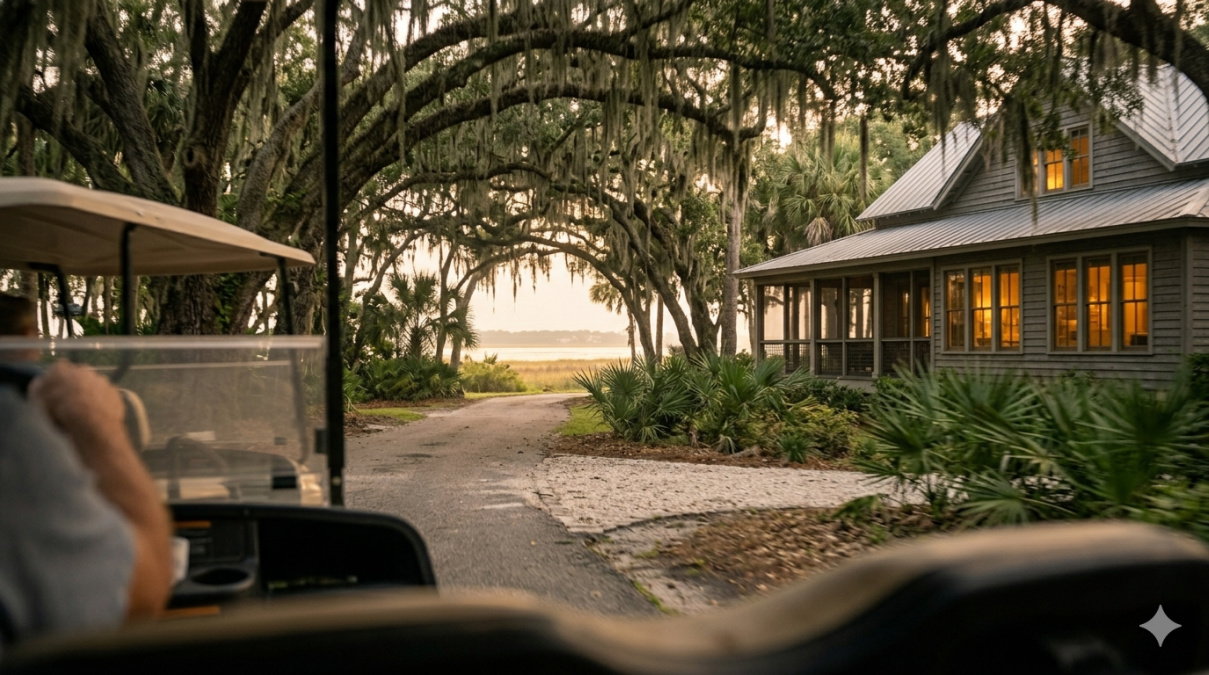
Golf carts are a genuine part of how people move around inside certain plantation communities, and many rental properties include one or offer them as an add-on. Inside Sea Pines or Palmetto Dunes, a golf cart covers a meaningful amount of daily territory in a way that is both practical and one of the more enjoyable ways to experience the island. If the property includes one, use it regularly.
Spring and fall visitors have a genuinely different transportation experience than summer guests. When temperatures sit in the mid-seventies and the humidity is down, cycling becomes a practical option for more of the daily routine, and the whole transportation question feels less pressing.
If flexibility around timing exists in your planning, the shoulder seasons give you back some options that peak summer removes.
Coastal Luxury manages vacation rental properties across Hilton Head Island and can help match the right property to how you actually plan to spend your time on the island. If transportation, walkability, or access to specific communities is part of your decision, ask us before you book rather than after you arrive. Browse available homes at